
Duchenne Muscular Dystrophy (DMD) is a genetic disorder characterized by progressive muscle weakness and degeneration. It occurs when the body cannot produce enough dystrophin, a protein that plays a crucial role in maintaining muscle strength and integrity. DMD affects approximately 1 in 3,500–5,000 male births worldwide and typically presents symptoms between the ages of 2 and 5 years.
What Causes DMD?
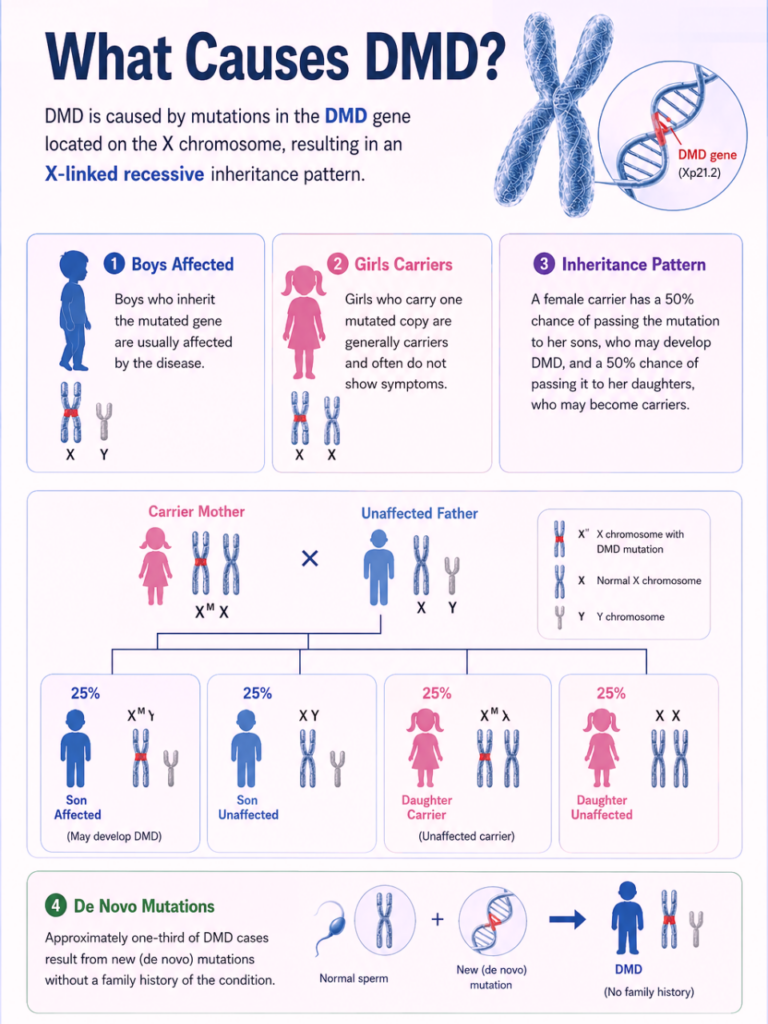
DMD is caused by mutations in the DMD gene located on the X chromosome, resulting in an X-linked recessive inheritance pattern.
- Boys who inherit the mutated gene are usually affected by the disease.
- Girls who carry one mutated copy are generally carriers and often do not show symptoms.
- A female carrier has a 50% chance of passing the mutation to her sons, who may develop DMD, and a 50% chance of passing it to her daughters, who may become carriers.
Approximately one-third of DMD cases result from new (de novo) mutations without a family history of the condition.
Signs and Symptoms of DMD
Symptoms usually appear during early childhood and may include:
– Delayed walking milestones
– Frequent falls
– Difficulty running, jumping, or climbing stairs
– Enlarged calf muscles (pseudohypertrophy)
– Using the hands to push up from the floor when standing (Gowers’ sign)
– Mild learning difficulties or behavioral issues in some children
As the disease progresses, muscle weakness worsens. Most patients require a wheelchair by around 10–12 years of age and may later develop heart and respiratory complications.
Can DMD Be Treated?
Although there is currently no cure for DMD, early treatment and multidisciplinary care can slow disease progression and improve quality of life.
Current management may include:
– Corticosteroid therapy to preserve muscle function
– Physical therapy and appropriate exercise programs
– Regular cardiac and respiratory monitoring
– Mutation-specific targeted therapies for eligible patients
– Emerging gene therapy approaches that offer promising future treatment options
Carrier Screening and Family Planning
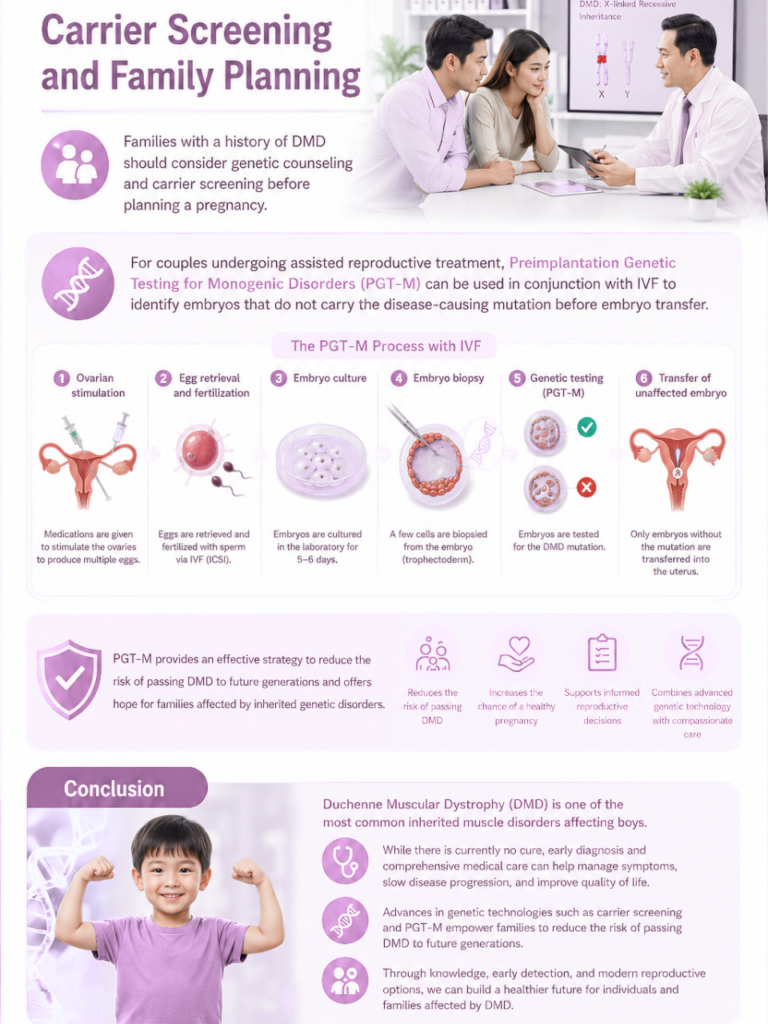
Families with a history of DMD should consider genetic counseling and carrier screening before planning a pregnancy.
For couples undergoing assisted reproductive treatment, Preimplantation Genetic Testing for Monogenic Disorders (PGT-M) can be used in conjunction with IVF to identify embryos that do not carry the disease-causing mutation before embryo transfer.
PGT-M provides an effective strategy to reduce the risk of passing DMD to future generations and offers hope for families affected by inherited genetic disorders.
Duchenne Muscular Dystrophy (DMD) is one of the most common inherited muscle disorders affecting boys. While there is currently no cure, early diagnosis, comprehensive medical care, and advances in genetic technologies such as carrier screening and PGT-M can significantly improve patient outcomes and help families make informed reproductive decisions.

Appointment
iBaby Fertility & Genetic Center
11 Floor, Athenee Tower, Wittayu Road
Mon – Sat 9 am – 4 pm
More Information
Tel : +6621688640
Tel : +6621688641
Tel : +6621688642
Tel : +6621688643
Mail : info@iBabyFertility.com
