Preparing for pregnancy is not just about general health care. A crucial factor that directly affects conception is hormones, because hormones control various processes in the body related to fertility, such as ovulation, preparation of the uterine lining, and embryo development. Even a minor hormonal abnormality can impact fertility.
Why Hormone Testing is Necessary Before Pregnancy:
Evaluate fertility status, such as levels of FSH, LH, and Estradiol (E2).
Detect abnormalities that could affect pregnancy, such as high Prolactin or abnormal Thyroid hormones (TSH, FT4).
Aid in treatment planning. If a hormonal imbalance is found, the doctor will consider medication to restore hormone balance before attempting conception or starting IVF (In Vitro Fertilization).
Reduce complications, such as miscarriage.
Hormones Tested Before Pregnancy and Their Functions:
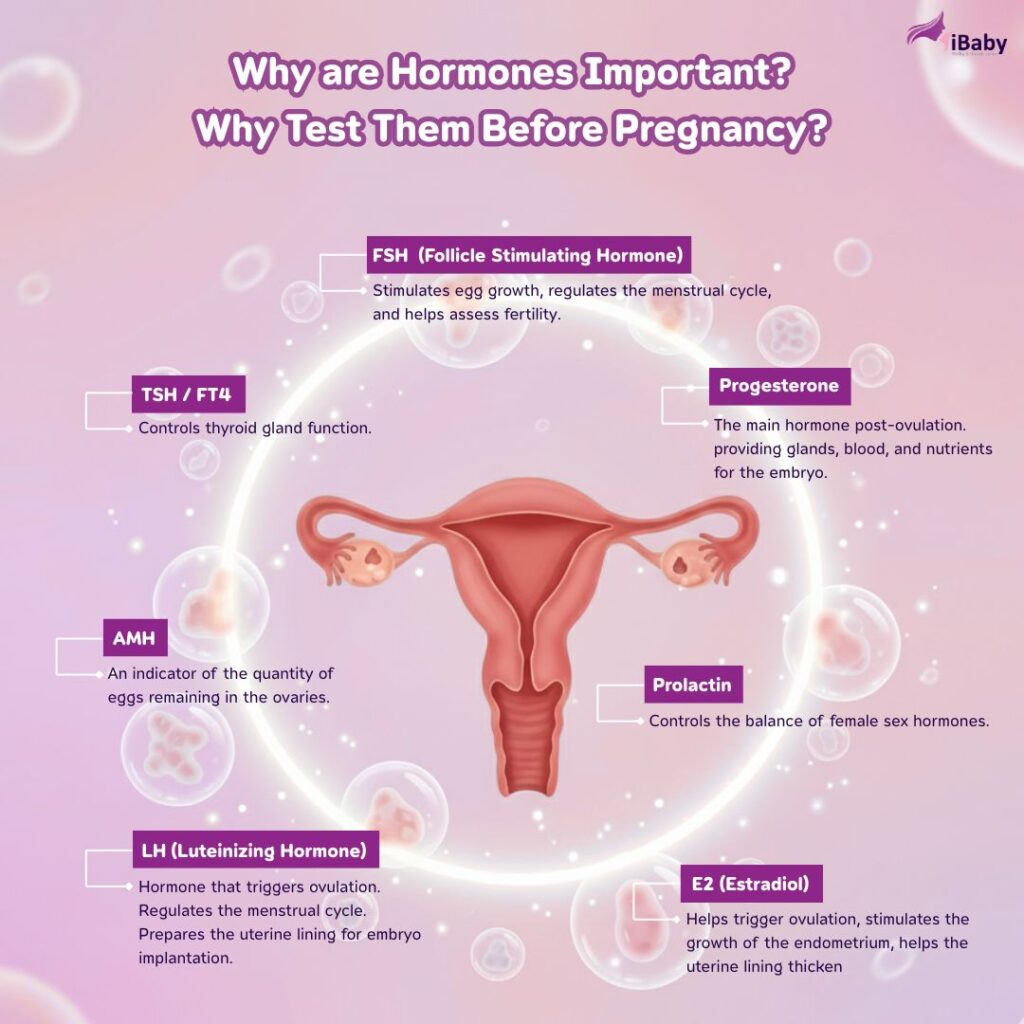
Hormone | Function |
FSH (Follicle Stimulating Hormone) | Stimulates egg growth, regulates the menstrual cycle, and helps assess fertility. Abnormally high FSH may indicate ovarian decline or low egg reserve. Abnormally low FSH means the body is not stimulating ovulation. |
LH (Luteinizing Hormone) | The hormone that triggers ovulation. After ovulation, it causes Progesterone to be secreted to prepare the uterine lining for embryo implantation. Helps regulate the menstrual cycle. Imbalanced LH levels can prevent ovulation and make conception difficult. It normally works together with FSH. |
Estradiol (E2) | Helps trigger ovulation, stimulates the growth of the endometrium, helps the uterine lining thicken, and ensures sufficient blood supply to support embryo implantation. It is an important indicator of ovarian function and the body’s readiness for pregnancy. Beyond conception, E2 also affects mood, sleep, libido, and metabolism. |
Progesterone | The main hormone post-ovulation. It thickens the uterine lining, providing glands, blood, and nutrients for the embryo. It inhibits uterine contractions to prevent the embryo from dislodging or being expelled. It also prepares the breasts for lactation after delivery. |
Prolactin | Controls the balance of female sex hormones. If Prolactin is too high, it can cause missed or irregular periods, making it difficult to conceive. |
TSH / FT4 | Controls thyroid gland function. Imbalanced thyroid hormones can cause anovulation or irregular periods, make embryo implantation difficult, and may increase the risk of miscarriage. |
AMH (Anti-Müllerian Hormone) | An indicator of the quantity of eggs remaining in the ovaries (not egg quality). Used as a guideline for infertility treatment, and for detecting premature ovarian insufficiency (POI) or PCOS. |
If you are planning to conceive or have been trying for a long time without success, hormone testing can help you understand your body better and may assist in planning your pregnancy.

Appointment
iBaby Fertility & Genetic Center
11 Floor, Athenee Tower, Wittayu Road
Mon – Sat 9 am – 4 pm
More Information
Tel : +6621688640
Tel : +6621688641
Tel : +6621688642
Tel : +6621688643
Mail : info@iBabyFertility.com