
What are uterine adhesions?
Uterine adhesions, also known as intrauterine adhesions or Asherman’s syndrome, occur when the lining of the uterus sticks together partially or completely. They are commonly caused by:
- Dilation and curettage (D&C) after miscarriage or delivery
- Uterine surgery
- Infections in the uterus
These adhesions can make the uterine cavity uneven, reducing the available space for embryo implantation. 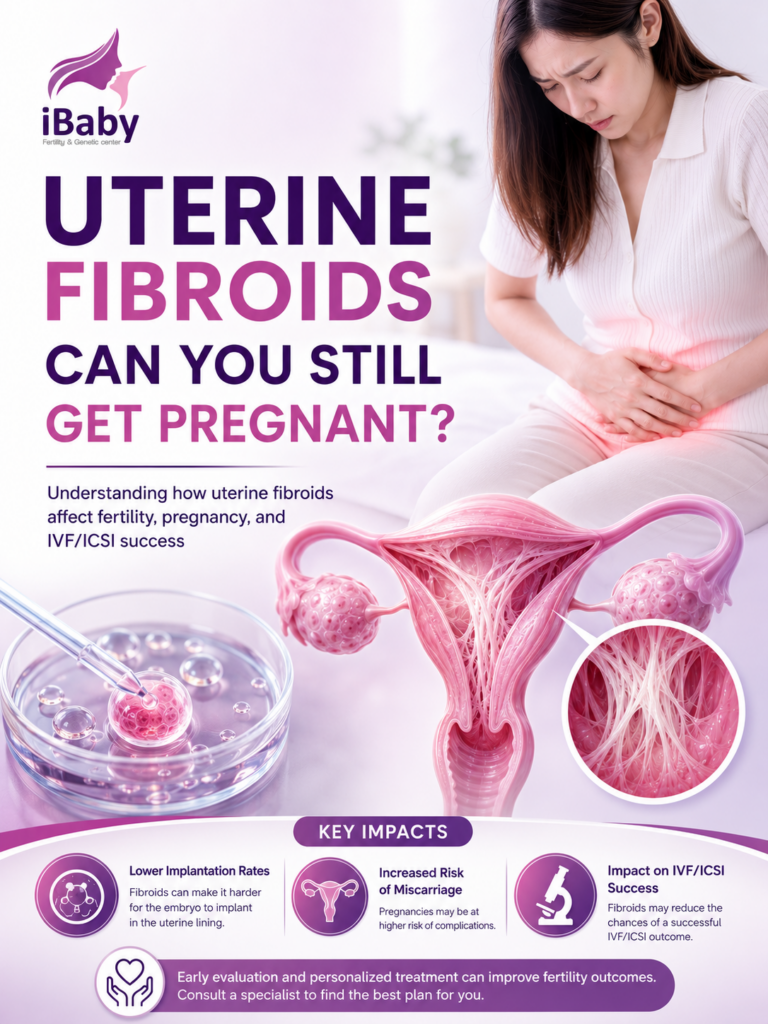
Can women with uterine adhesions get pregnant?
Whether pregnancy is possible depends on the severity and location of the adhesions:
- Mild to moderate adhesions: Pregnancy is still possible, but the chances of embryo implantation are lower, and there is a higher risk of miscarriage.
- Severe adhesions: Natural pregnancy is unlikely, and treatment is usually required before attempting conception.

For women undergoing in vitro fertilization (IVF/ICSI), uterine adhesions may also affect the success of embryo transfer.
Effects of uterine adhesions on IVF/ICSI
- Reduced implantation rates: Embryos may have difficulty attaching to the uterine lining.
- Uneven uterine cavity: Makes implantation more challenging.
- Increased risk of miscarriage.
Treatments for uterine adhesions before IVF/ICSI
- Hysteroscopy: A small camera is inserted through the cervix into the uterine cavity to cut or remove adhesions.
- Anti-adhesion gels or devices: Prevent adhesions from forming again after surgery.
- Hormonal therapy: Estrogen is used after adhesiolysis to help the uterine lining recover, though a recovery period is required before starting IVF/ICSI.
Recovery time after adhesiolysis before IVF/ICSI
- Immediately after surgery:
- Patients usually need 1–2 days of rest.
- Mild abdominal cramping and slight bleeding may occur.
- Uterine lining recovery:
- Estrogen therapy helps the lining regenerate.
- Typically takes 4–6 weeks for the lining to thicken and become ready for embryo transfer.
- Follow-up assessment:
- Ultrasound or repeat hysteroscopy is done to confirm that the uterine cavity is smooth and ready for IVF/ICSI.
- Once the uterus is ready, the doctor will plan the embryo transfer.

Appointment
iBaby Fertility & Genetic Center
11 Floor, Athenee Tower, Wittayu Road
Mon – Sat 9 am – 4 pm
More Information
Tel : +6621688640
Tel : +6621688641
Tel : +6621688642
Tel : +6621688643
Mail : info@iBabyFertility.com
