
The information you are looking for is deeply interconnected. Insulin Resistance is a key mechanism that drives Polycystic Ovary Syndrome (PCOS), which is one of the leading causes of female infertility.
1. Insulin Resistance and Hormonal Mechanisms
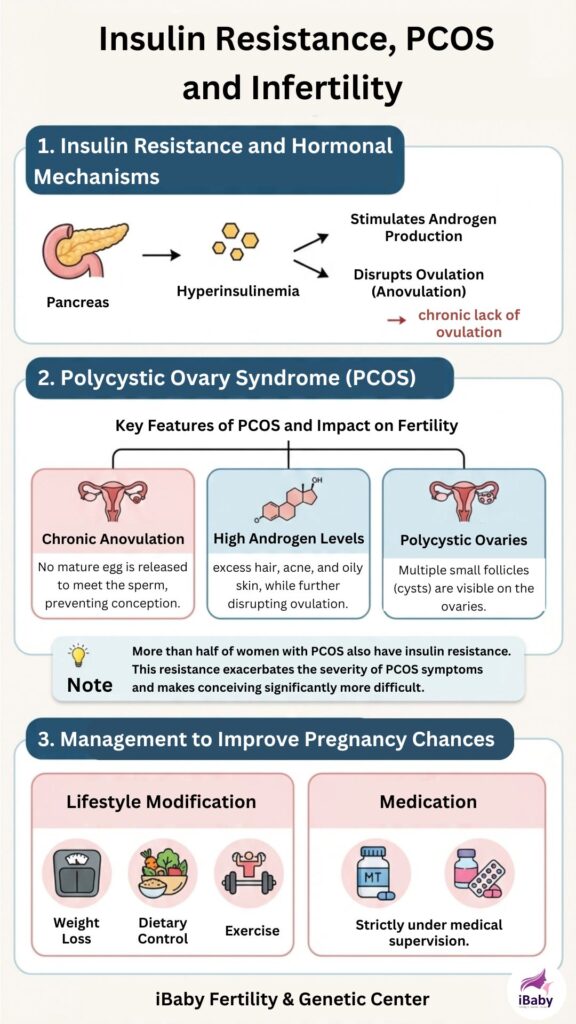
Insulin resistance occurs when the body’s cells (such as muscle and fat cells) do not respond effectively to insulin. As a result, the pancreas must produce higher amounts of insulin—a condition known as Hyperinsulinemia—to maintain stable blood sugar levels.
High insulin levels directly impact the reproductive system in the following ways:
- Stimulates Androgen Production: Excess insulin triggers the ovaries and adrenal glands to produce surplus male hormones, such as testosterone (Hyperandrogenism).
- Disrupts Ovulation (Anovulation): Elevated male hormones interfere with the development and release of eggs from the ovaries. This leads to chronic lack of ovulation or irregular cycles, which is the primary cause of infertility.
2. Polycystic Ovary Syndrome (PCOS)
PCOS is a common endocrine disorder in women of reproductive age. It is characterized by three main features:
Key Features of PCOS | Impact on Fertility |
Chronic Anovulation | No mature egg is released to meet the sperm, preventing conception. |
High Androgen Levels | Causes symptoms like hirsutism (excess hair), acne, and oily skin, while further disrupting ovulation. |
Polycystic Ovaries | Multiple small follicles (cysts) are visible on the ovaries, resulting from eggs that failed to mature and release. |
💡 Note: More than half of women with PCOS also have insulin resistance. This resistance exacerbates the severity of PCOS symptoms and makes conceiving significantly more difficult.
3. Management to Improve Pregnancy Chances
Since insulin resistance is a core driver of infertility in PCOS, treatment focuses heavily on improving insulin sensitivity:
Lifestyle Modification:
- Weight Loss: Losing even a small amount of weight (as little as $5-10\%$) can significantly improve insulin resistance and help restore regular ovulation.
- Dietary Control: Reducing intake of refined carbohydrates, sugar, and unhealthy fats helps regulate blood sugar and insulin levels.
- Exercise: Physical activity increases the cells’ sensitivity to insulin.
Medication:
- Insulin Sensitizers: Medications like Metformin (typically for diabetes) are often used “off-label” for PCOS to lower insulin levels, reduce androgens, and help restore ovulation.
- Ovulation Induction Agents: Medications such as Clomiphene or Letrozole may be prescribed to stimulate the growth and release of eggs.
If you suspect you have PCOS or insulin resistance, consulting a Reproductive Endocrinologist or an OB-GYN is highly recommended to develop an appropriate treatment plan.

Appointment
iBaby Fertility & Genetic Center
11 Floor, Athenee Tower, Wittayu Road
Mon – Sat 9 am – 4 pm
More Information
Tel : +6621688640
Tel : +6621688641
Tel : +6621688642
Tel : +6621688643
Mail : info@iBabyFertility.com
Line : @iBaby
