
Hemophilia is a genetic disorder in which the body lacks or does not have enough clotting factors. As a result, blood takes longer than normal to stop bleeding. People with hemophilia therefore tend to bleed easily and have difficulty stopping bleeding, especially after an injury or surgery. In some cases, bleeding can also occur spontaneously inside the joints and muscles.
This condition is found in approximately 1 in 5,000 male infants and is more common in males than females because it is inherited through the X chromosome (X-linked recessive inheritance).
Types of Hemophilia
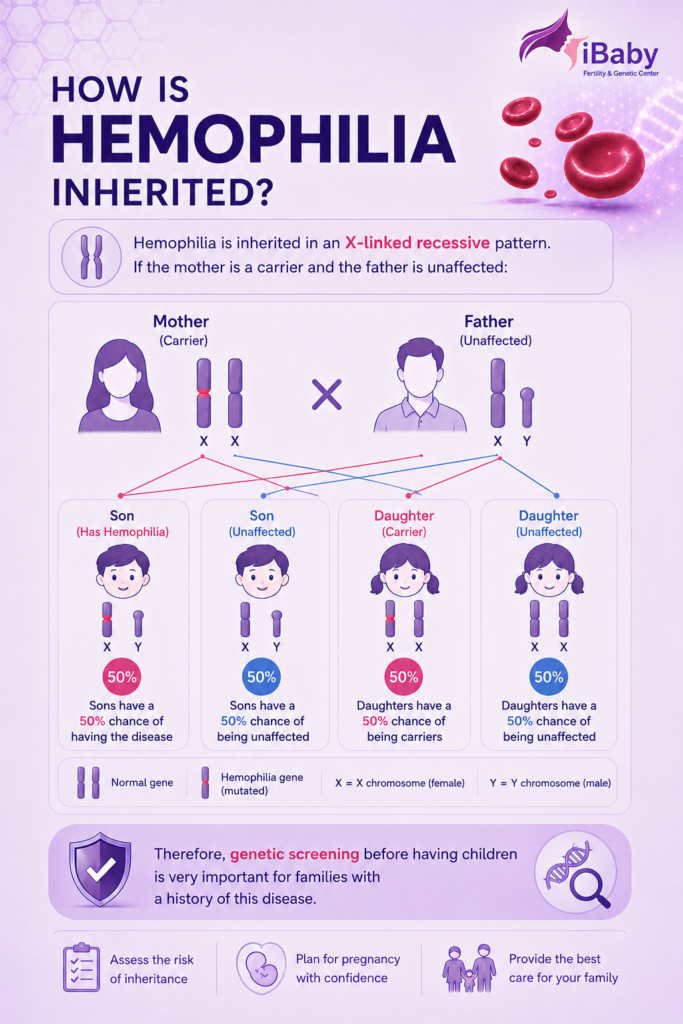
Hemophilia A
Caused by a deficiency of clotting Factor VIII (8), this is the most common type and accounts for about 80–85% of all patients.
Hemophilia B
Caused by a deficiency of Factor IX (9), it has symptoms similar to Hemophilia A but is less common.
Symptoms of Hemophilia
The severity of symptoms depends on the level of clotting factor remaining in the body.
1.Severe
- Spontaneous bleeding into joints and muscles
- Pain, swelling, and difficulty moving
Risk of bleeding in the brain, which can be life-threatening
2. Moderate
- Easy bleeding after minor injuries
- Occasional bleeding into joints
3.Mild
- May have no obvious symptoms
- Often discovered during surgery, tooth extraction, or after an accident
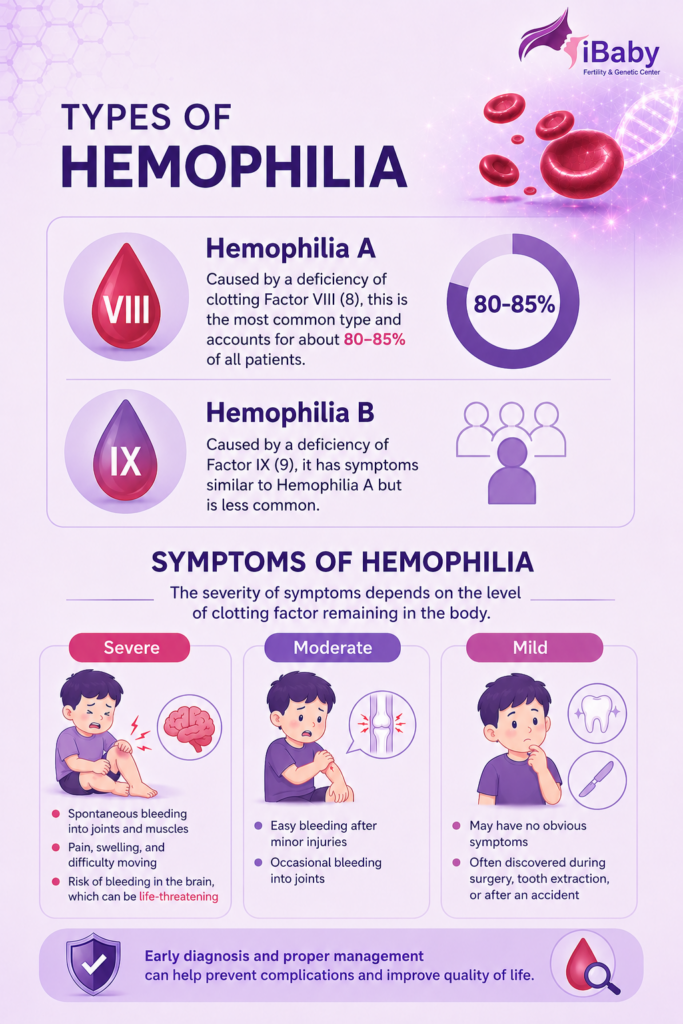
How Is Hemophilia Inherited?
Hemophilia is inherited in an X-linked recessive pattern. If the mother is a carrier and the father is unaffected:
- Sons have a 50% chance of having the disease
- Sons have a 50% chance of being unaffected
- Daughters have a 50% chance of being carriers
- Daughters have a 50% chance of being unaffected
Therefore, genetic screening before having children is very important for families with a history of this disease.
Can the Disease Be Prevented from Being Passed on to Children?
For couples with a family history of hemophilia, the risk of passing on the disease can be planned for using IVF/ICSI combined with embryo genetic testing (PGT-M: Preimplantation Genetic Testing for Monogenic Disorders).
PGT-M helps select embryos that are unaffected or do not carry the abnormal gene before transfer into the uterus, significantly reducing the chance of passing on a genetic disorder to the child.
Hemophilia is a hereditary bleeding disorder caused by a genetic abnormality. Although it cannot yet be cured, patients can still have a good quality of life with appropriate treatment. For families at risk, genetic testing and PGT-M are important options for planning a healthy pregnancy and having a child free from genetic disease.

Appointment
iBaby Fertility & Genetic Center
11 Floor, Athenee Tower, Wittayu Road
Mon – Sat 9 am – 4 pm
More Information
Tel : +6621688640
Tel : +6621688641
Tel : +6621688642
Tel : +6621688643
Mail : info@iBabyFertility.com
