
Thalassemia is an inherited blood disorder caused by abnormalities in hemoglobin production. Hemoglobin is an essential component of red blood cells responsible for carrying oxygen throughout the body. When hemoglobin is produced abnormally, red blood cells become fragile and break down more easily, leading to chronic anemia. The severity of the condition varies from person to person.
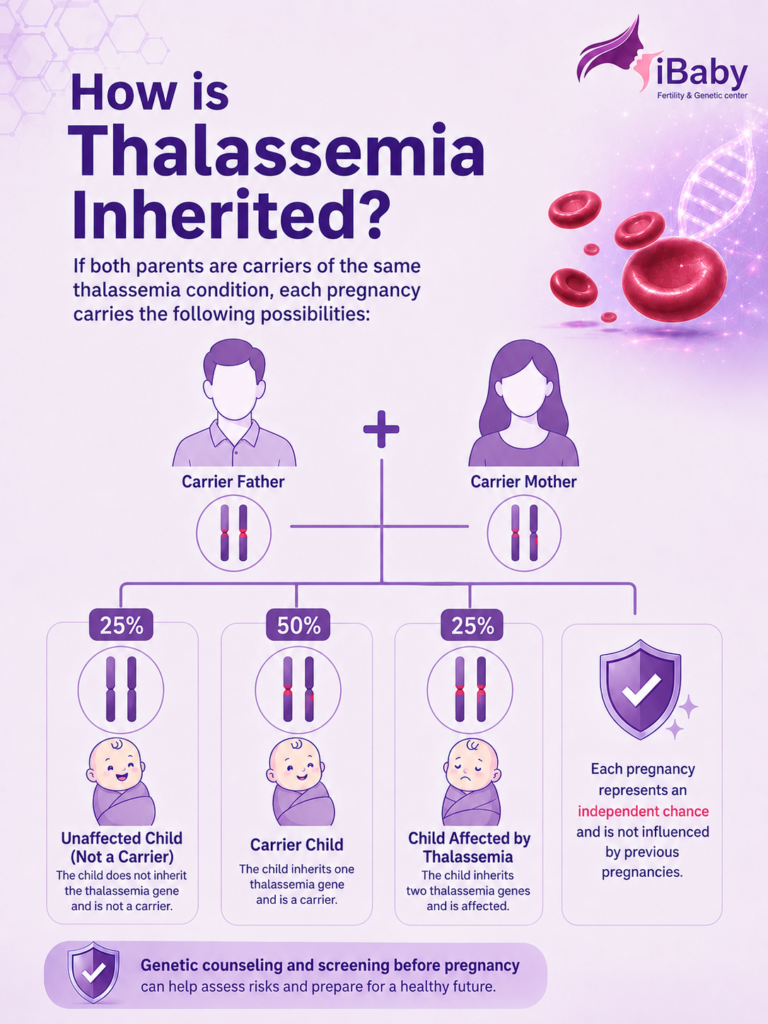
How is Thalassemia Inherited?
If both parents are carriers of the same thalassemia condition, each pregnancy carries the following possibilities:
– 25% chance of having an unaffected child (not a carrier)
– 50% chance of having a carrier child
– 25% chance of having a child affected by thalassemia
Each pregnancy represents an independent chance and is not influenced by previous pregnancies.
Symptoms of Thalassemia
The severity can range from mild to severe.
Thalassemia Carrier
– Usually no symptoms
– May have smaller-than-normal red blood cells
Moderate Thalassemia
– Mild to moderate anemia
– Fatigue and low energy
– Slower growth in children
– Some individuals may require occasional blood transfusions
Severe Thalassemia
– Significant anemia
– Enlarged liver or spleen
– Growth delay
– Regular blood transfusion requirements
– Possible complications related to iron overload
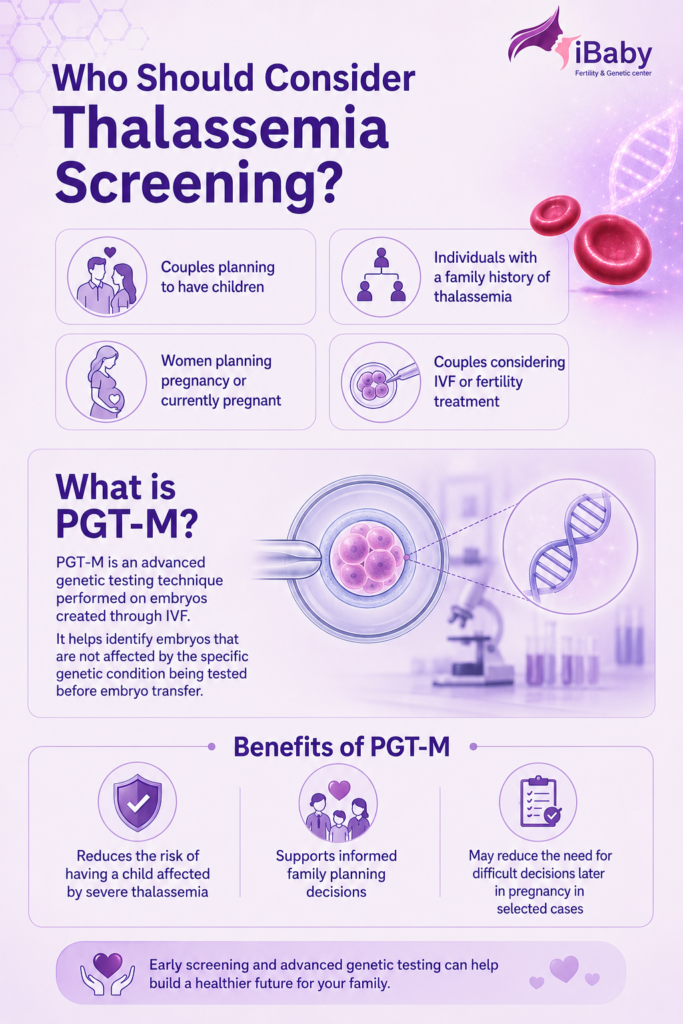
Who Should Consider Thalassemia Screening?
– Couples planning to have children
– Individuals with a family history of thalassemia
– Women planning pregnancy or currently pregnant
– Couples considering IVF/ICSI or fertility treatment
Thalassemia IVF/ICSI and PGT-M: Planning for Future Parenthood
For couples who are both carriers or have an increased risk of passing a genetic condition to their child, In Vitro Fertilization (IVF/ICSI) combined with Preimplantation Genetic Testing for Monogenic Disorders (PGT-M) may be considered.
What is PGT-M?
PGT-M is an advanced genetic testing technique performed on embryos created through IVF/ICSI. It helps identify embryos that are not affected by the specific genetic condition being tested before embryo transfer.
Benefits of PGT-M
– Reduces the risk of having a child affected by severe thalassemia
– Supports informed family planning decisions
– May reduce the need for difficult decisions later in pregnancy in selected cases
However, PGT-M is designed to test for specific genetic conditions and cannot guarantee pregnancy outcomes or eliminate all genetic risks. Individual consultation with fertility specialists and genetic counselors is recommended.
Although thalassemia is a genetic condition, reproductive risk can be assessed before pregnancy. Carrier screening, together with assisted reproductive technologies such as IVF/ICSI and PGT-M, provides couples with valuable information to make informed decisions and plan their family with confidence.

Appointment
iBaby Fertility & Genetic Center
11 Floor, Athenee Tower, Wittayu Road
Mon – Sat 9 am – 4 pm
More Information
Tel : +6621688640
Tel : +6621688641
Tel : +6621688642
Tel : +6621688643
Mail : info@iBabyFertility.com
