
What is G6PD?
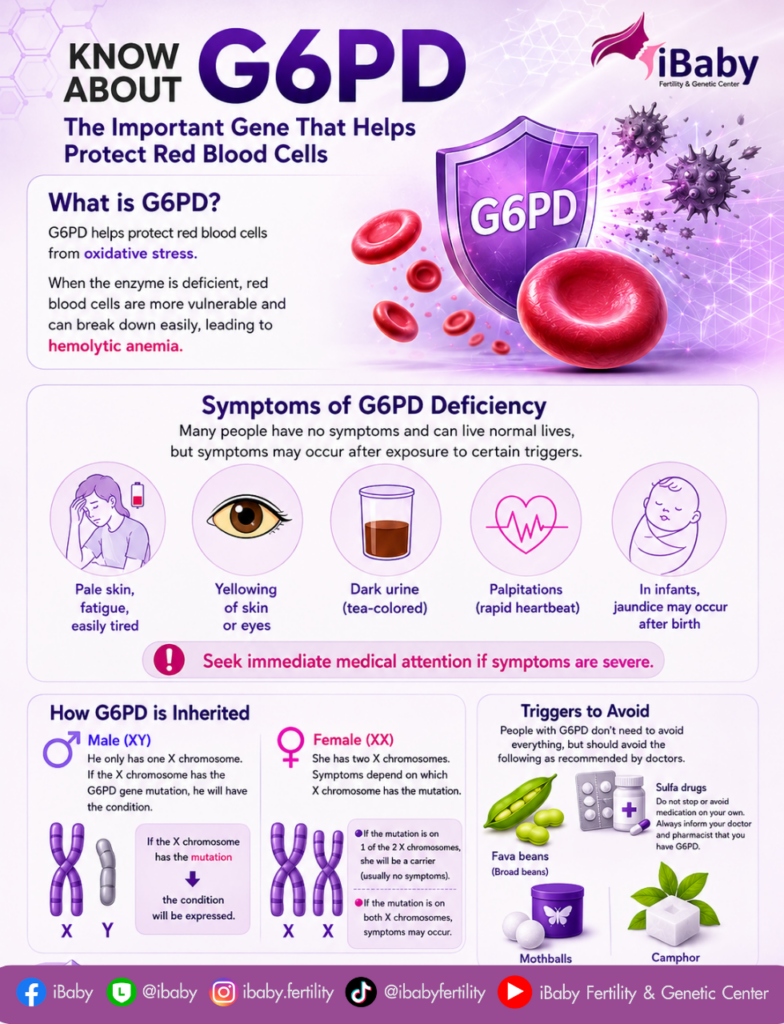
G6PD (Glucose-6-Phosphate Dehydrogenase Deficiency) is an inherited genetic condition that makes red blood cells more vulnerable to damage than usual. When exposed to certain triggers such as specific medications, infections, or certain foods, red blood cells may break down more rapidly, leading to a condition called hemolysis (red blood cell destruction). G6PD deficiency is relatively common, especially among Asian populations, including Thailand.
What is the role of G6PD?
G6PD is an enzyme that helps protect red blood cells from oxidative stress. When the body lacks this enzyme, red blood cells become less resistant to oxidative damage and may break down more easily, which can lead to acute anemia.
How is G6PD inherited?
G6PD deficiency is inherited through the X chromosome (X-linked inheritance).
– Males (XY) are more likely to develop symptoms because they have only one X chromosome.
– Females (XX) may be carriers and, in some cases, can also experience symptoms.
Symptoms of G6PD Deficiency
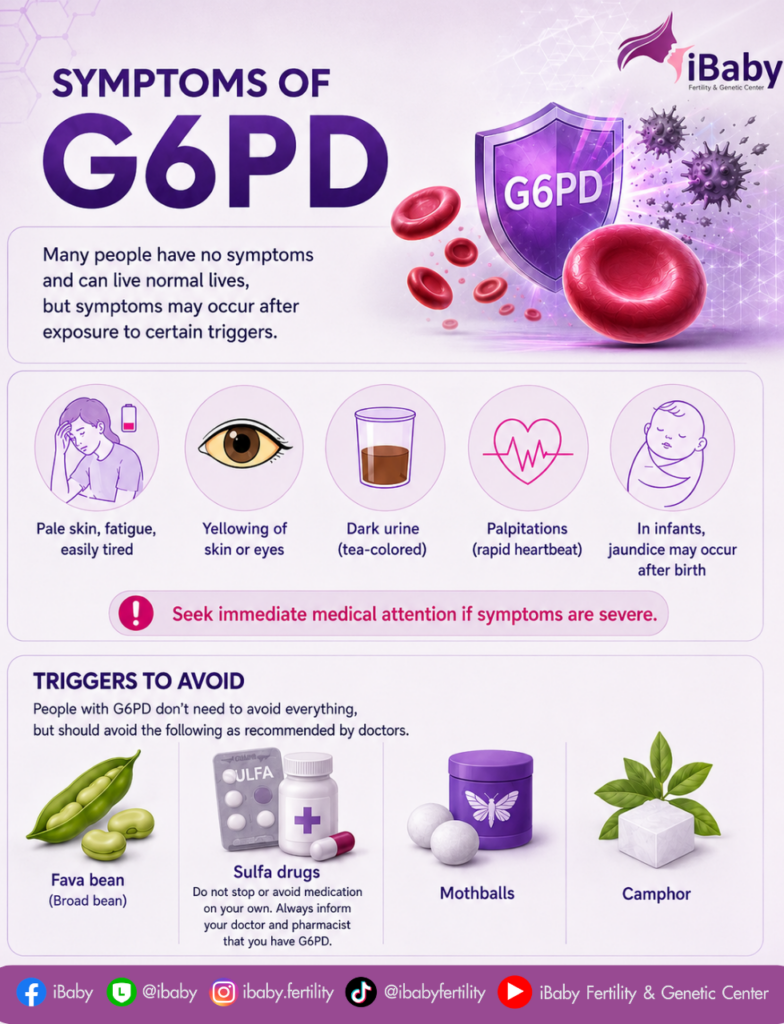
Many individuals with G6PD deficiency have no symptoms and live normal lives. However, exposure to triggers may cause:
– Pale skin (anemia)
– Fatigue or weakness
– Jaundice (yellowing of the skin and eyes)
– Dark-colored urine (tea-colored urine)
– Rapid heartbeat
– In newborns, neonatal jaundice may occur
If symptoms are severe, medical attention should be sought promptly.
Common Triggers to Avoid
People with G6PD deficiency do not need to avoid everything, but should be cautious with triggers recommended by healthcare professionals.
1. Certain Foods
– Fava beans
2. Certain Medications
Examples include:
– Some antibiotics
– Certain antimalarial medications
– Some drugs used to treat infections
Do not stop or avoid medications on your own. Always inform your doctor and pharmacist if you have G6PD deficiency.
3. Infections
Infections themselves may trigger red blood cell breakdown even without medication exposure.
Can G6PD Deficiency Be Cured?
G6PD deficiency is a genetic condition and cannot be permanently cured. However, most individuals can live healthy and normal lives with proper awareness and avoidance of triggers.
Recommended self-care includes:
– Inform healthcare providers before receiving medications
– Maintain a balanced diet as advised by your doctor
– Monitor for unusual symptoms such as anemia, jaundice, or dark urine
– Keep medical information accessible, such as in a health app or medical card
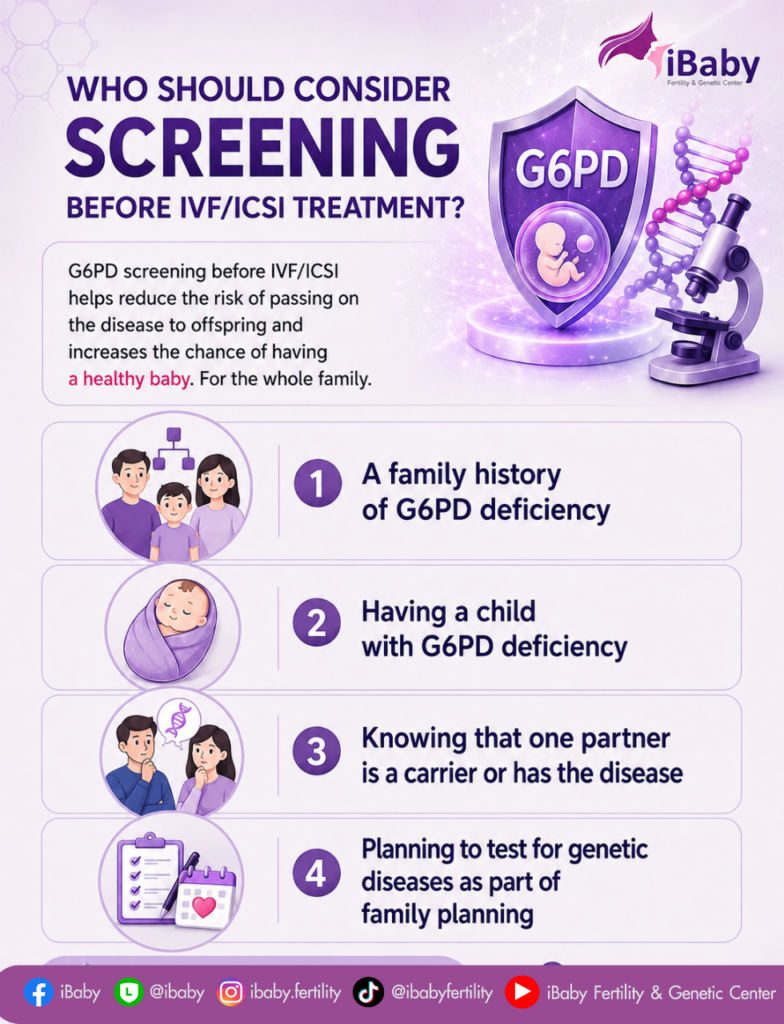
Who Should Consider Genetic Screening Before IVF/ICSI?
– Individuals with a family history of G6PD deficiency
– Couples who previously had a child with G6PD deficiency
– Individuals known to be carriers or affected
– Couples interested in genetic testing as part of fertility planning
The most appropriate testing strategy should be determined together with a reproductive medicine specialist and a genetic counselor based on family history and reproductive goals.

Appointment
iBaby Fertility & Genetic Center
11 Floor, Athenee Tower, Wittayu Road
Mon – Sat 9 am – 4 pm
More Information
Tel : +6621688640
Tel : +6621688641
Tel : +6621688642
Tel : +6621688643
Mail : info@iBabyFertility.com
